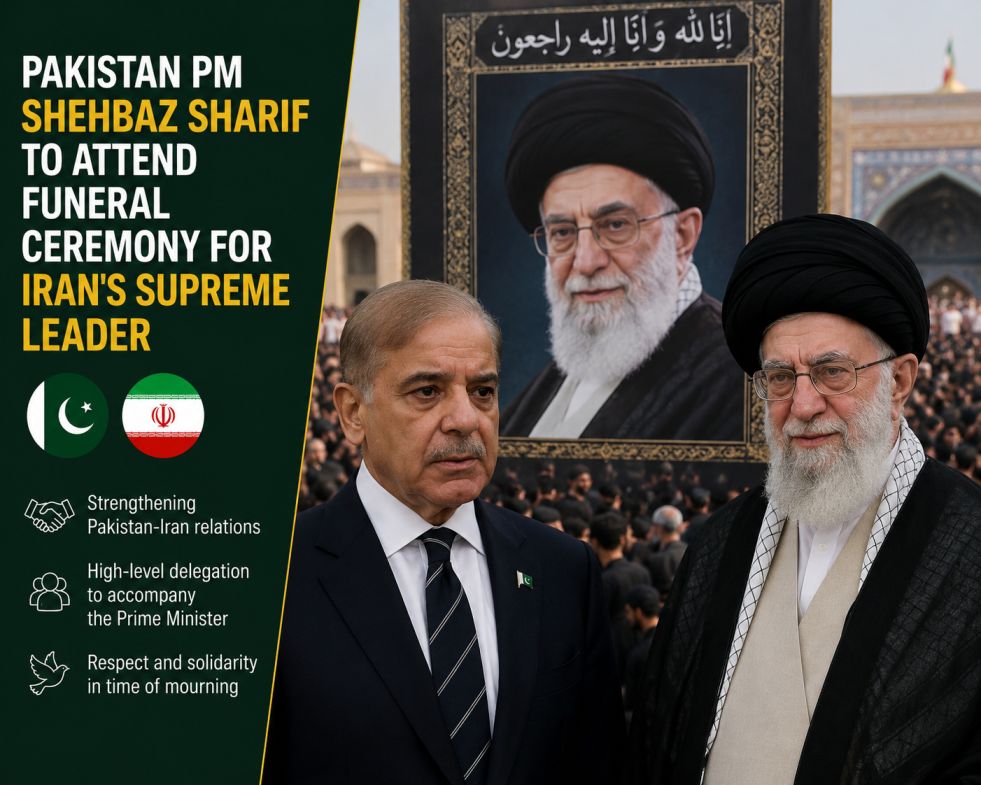
Pakistan’s Prime Minister Shehbaz Sharif is set to visit Iran and Türkiye from July 3 to July 5, marking his presence at the funeral of Iran’s Supreme Leader Ali Khamenei. This visit comes amidst ongoing diplomatic discussions aimed at easing regional tensions between the United States and Iran. Sharif’s attendance at Khamenei’s funeral signifies Pakistan’s diplomatic engagement with Iran, highlighting the importance of regional alliances during this period of transition in Iran’s leadership.
The funeral in Tehran is anticipated to draw representatives from approximately 100 countries, including a diverse array of international leaders. Notable attendees include Tajikistan’s President Emomali Rahmon and Georgia’s President Mikheil Kavelashvili. Russia will be represented by Dmitry Medvedev, the former president and current deputy chairman of the Security Council. China and India will also send high-level representatives, reflecting the global significance of the event.
Iranian state media reports that the public funeral will commence in Tehran, with Khamenei’s body lying in state at a significant religious and ceremonial site. Following the initial ceremonies, a procession will move through the country, culminating on July 9 in Mashhad, Khamenei’s birthplace, where he will be laid to rest. The event is expected to be a major gathering of political and diplomatic figures, underscoring Iran’s influential role in the region.
Khamenei, who became Iran’s supreme leader in 1989, played a pivotal role in expanding Iran’s nuclear program and bolstering its regional alliances. His tenure ended with his death on February 28, the result of a U.S.-Israeli military operation targeting Iran’s leadership and strategic capabilities. In the wake of his passing, Mojtaba Khamenei has succeeded him as supreme leader, marking a new chapter in Iran’s governance.
The funeral takes place amid ongoing negotiations between Washington and Tehran, following a recent ceasefire after a period of conflict. These talks are based on a memorandum of understanding reached last month. However, Israel remains outside these negotiations, voicing concerns that the current framework insufficiently addresses Iran’s nuclear ambitions. This ongoing diplomatic engagement keeps Iran’s nuclear program at the forefront of international and regional discussions.