
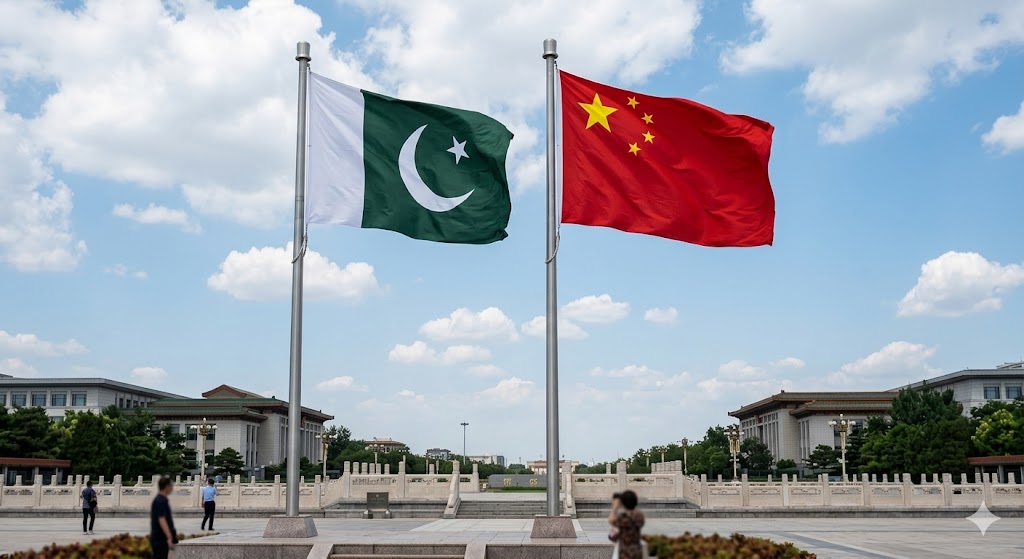
The longstanding alliance between China and Pakistan is expanding beyond its traditional roots in infrastructure projects, as both nations aim to deepen ties in economic, technological, and strategic areas. Historically, this relationship has been defined by the China-Pakistan Economic Corridor (CPEC), a significant investment program launched in 2015. CPEC focuses on building roads, ports, power facilities, and transport systems to connect western China with the Arabian Sea through Pakistan, marking a substantial effort to enhance regional connectivity and alleviate Pakistan’s energy deficits.
While CPEC has successfully delivered key infrastructure developments, such as power plants, transport networks, and the Gwadar Port, the partnership is now transitioning into a new phase. This phase emphasizes long-term economic resilience, industrial growth, and technological advancements. The updated agenda under CPEC places greater importance on special economic zones, industrial investment, digital infrastructure, and innovation. There is also a concerted push towards collaboration in cutting-edge areas like 5G technology, fiber-optic networks, satellite technology, e-commerce, and information technology.
A noticeable shift towards private sector involvement is strengthening business ties between the two countries. Recent investment forums have facilitated numerous agreements and joint ventures between Chinese and Pakistani companies, underscoring a growing trend of business-to-business cooperation. This evolution from a focus on physical infrastructure to fostering sustainable economic and institutional capacity is seen as a vital step forward by officials and business leaders from both nations.
In addition to economic collaboration, education is becoming a core element of the China-Pakistan partnership. Thousands of Pakistani students are pursuing studies in Chinese universities, acquiring technical skills, professional experiences, and networks that promise to enhance future bilateral cooperation. Moreover, diplomatic collaboration between Beijing and Islamabad is intensifying on both regional and global platforms, indicating a broadening strategic alliance that transcends infrastructure.
Despite facing hurdles such as security issues, financial constraints, and implementation challenges, China and Pakistan remain committed to developing a diversified and robust long-term partnership. By broadening the scope of their collaboration, both countries are setting the stage for a more resilient and comprehensive relationship that looks beyond traditional infrastructure projects. This expanded partnership aims to build a future that is economically and strategically beneficial for both nations.